Thursday, October 22, 2015

Native Story - Cards of Darkness

 
    Long ago, explores landed in a new land. These explorers were female pirates and landed on an island hat was already inhabit by natives. They arrived on the month of January. Their goal was to get an abundance of the native's resource, which was strawberries. They would bring back a surplus of that resource and gain profit in their homeland once they took it back.
On the first month they decided they were going to establish peaceful relations with the natives, but had to sacrifice they only resource they had in order to establish that peace. The natives still provided the pirates with strawberries but only enough for them to eat and survive, not collect and take back to gain profit. This was good for the first month, they had to make a good first impression and have a good relationship with them in order to gain their trust.
On the second month, February, they had to press force on the natives for strawberries. By then they had gain the trust of the natives, so they easily pushed the natives and asked for their resorce. These natives then had to go out and get strawberries for the pirates. During that month they also experienced bad weather. The natives had to work hard to survive, protect their strawberries, and get through the harsh conditions. The pirates also had to do something so they can survive, so they had to then do an emergency press, forcing the natives who were already working hard for their own survival to work even harder. The natives did feed the pirates, and continued to have good relations with the
During the next few months the pirates started to press more force on the natives, which gave them more surplus. The weather was good throughout; therefore, the weather was on their side so they had no problem pressing the force on the natives. They natives then started to have violent response to the force of the pirates, but when they did the pirates pressed even more force, but they mostly had good relations with the natives. The pirates were becoming more powerful within the natives and could easily boss them around and push them so they could get them more strawberries that they would eventually bring back to the homeland, enough for them to sell and make money off, which was their goal in the first place
The pirates then realized when they would press force the more surplus they would get, and it didn’t matter what kind of relationship they had with natives, because by now they were superior and had more power. Whenever the natives argued with them or didn’t like something the pirates were doing the pirates would ignore it and press more force which would lead to more strawberries or surplus. By now they were gaining an abundance of strawberries, a good amount to make a profit out of. The pirates slowly and carefully were piling up on the strawberries, enough to make money off of. 


# of Surplus


0
0
0
1
0
0
0
0
1
1
1
0
MONTH
January
February
March
April
May
June
July
August
September
October
November
December


Monday, September 7, 2015

Borrowed Literature "Hanseldee and Greteldum"

 "Literature grows out of other literature." which is very true. Sometimes in literature writers "borrow" other writer's work, In some cases some of the most famous and well know pieces of literature had some borrowed literature in them. For example, some of the fairy tales that we have heard before in our childhood were created from borrowed literature.  Disney's is one of the biggest that uses other stories to create their famous stories. Disney's original work Alice in Wonderland, Treasure Island, Cat in the Hat along with others where first written by other. It's really not Disney's "original" work, since it did come and was based off of somebody's else work.  The stories that Disney created all were based off borrowed literature. Disney borrowed another person's original story and from there made their famous fairy tale like Snow White, and Sleeping Beauty. For example Snow White was Vladivostok to Valdosta abd Sleeping Beauty was Sligo to Salinas.
 People/readers are fin with the modification of the stories, because like Foster said "We-like the idea if a prince charming, or the healing power of tears." I know that sometimes when you're online on the subject of fairy tales, they is always a page that says "The Real Origins of..." or even "The Dark Truth behind..." I've actually opened the pages, and the stores have a lot of similarities to the fairy tales I know, which are the ones that have borrowed literature in them. The characters are all the same, they have major differences than the stories I've heard and know Foster uses Hansel and Gretel as an example. We know the story of Hansel and Gretel as "Hansel and Gretel," but it's original author titled it "The Gingerbread House," which was written in 1969. It's innovation of the story is similar to the story, but it's also very different/ Their names are different and the witch doesn't even kill the children.  In the original story she kills doves,  In a past chapter we have talked about how writers modernized Shakespeare, it not only happens with Shakespeare, it also happens with these kind of stories. Foster explains how the story doesn't have to be take place in a forest, it can happen in a city. Some authors do twist the stories, but like the example above some authors change the story to emphasize the fairy tale. "...fairy tales, like Shakespeare, the Bible,  mythology and all other writing and telling, belong to the one big story..." Borrowed literature gives a sense of irony to the story. Sometimes we're okay with author's borrowing work, because we prefer the new story with borrowed information, than the original story. We as readers want novels to have differences and similarities which is another reason why we are okay with borrowed literature. We've already read one story over and over again, but what if we read the same story but with some changes?


Monday, August 31, 2015

Chapter 12: "Is that a Symbol?"

   
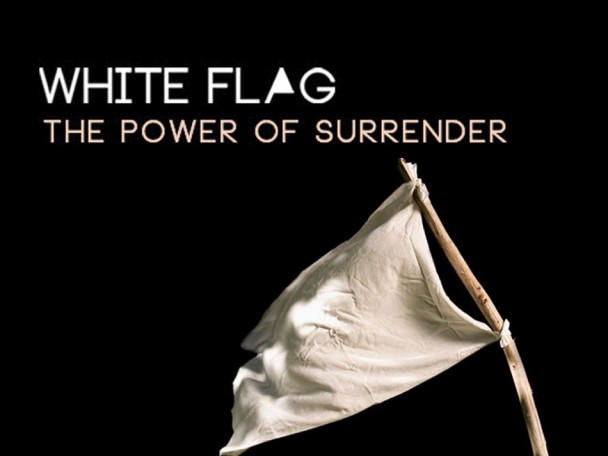
        What is a symbol and what does it mean? What do you think? Sometimes a symbol doesn't have a deep meaning like we think. There are some symbols that have a meaning we know, like the meaning of a white flag. When a symbol can be taken down to one meaning, then it is an allegory. An allegory is a story, or poem, or picture that can be interpreted to reveal a hidden meaning, typically a moral or political meaning. A good example is John Bunyan's, "The Pilgrims Progress." I know that in past English classes I've taken whenever we read a story, poem, or passage we are always told to look for the the different symbols. We are told to break down the reading and analyze it.
     Foster explains that if we want to find symbols in a reading we must ask questions, have prior knowledge and experience. For example the cave can have many meanings like in "A Passage to India." In order to figure out what the meaning behind it is you have to use the three things: experience, knowledge and questions. Many authors use symbols to emphasize things that they want to emphasize in their story. Symbols are a way to give author's work color and make their story interesting, instead of actually writing about a character giving up, they can include a white flag, since we all know a white flag means surrender.
      In the story, "A Passage to India," they explain how she is innocent, and in a situation where she is about to face something she hasn't which is what the cave stands for. The cave stands for experience. The author includes a cave, because it signifies the known, and in order for her to know what is in that cave, she needs to experience it. Instead of directly approaching and being forward, they use a symbols.
      Sometimes readers will see a symbol differently and it's true. Whenever we are in class, and our teacher would ask the students in the class what they thought a certain thing in the story/passage meant, every student would have a different input of what they though it could mean. Sometimes a symbol in a reading is an event or action. Us as readers, are what give the author and its symbols life. Our imagination, and creativity especially is what helps a lot when reading and defining symbols. As students at Booker T. Washington HSPVA our minds is what puts these stories together. We feel what the author writes, and we are all different and unique, so we interpret the story and the symbols in it in different ways. The author writes his/hers story story and adds/includes symbols for special effects. The authors includes a symbol, allegory, a quote, a verse from the bible, or even a piece of borrowed literature to make their work more interesting, and engage their reader. Once we are engage our minds begin to work, and it starts analyzing what we are reading, and we begin to look for things like symbols in the reading.
       If you think it's a symbol it probably is. A symbol helps the story become meaningful and engaging. There are symbols in pretty much everything you read. If you rad a small passage to a full novel,you will find a lot of symbolism. There are some symbols that are already known to us, but it can have a different meaning depending on the story and how it is used. It's our job as readers to identify the symbol. Whether it's a symbols we already know, or a different symbol that the authors includes, symbols are good for reading. It helps the author and their work.


Watch What You Read Chapter 25: "Don't Read With Your Eyes" Emma Hernandez


   When a reader is reading, there is more behind the words that are written on the paper. "You have to read through eyes that are not your own," Foster says. We, as readers need to learn how to look and understand the characters from their point of view, in order to understand their story and situation. We need to learn how to see what their situation is through their perspectives. We need to watch what we read and interpret the story. "...if e want to get the most out of our reading as far as is reasonable, we have to try to take the works as they are intended to be taken." "...don't read only from your own fixed position...find a reading perspective that allows for sympathy with the historical moment of the story..." are some things written in this chapter.
 
  In order to gain from the reading, it's our job as readers to not just read and skim the surface, we need to dig deep in the story and squeeze every piece of important and useful information and detail. Analyzing a story well is very important and critical, because when you are reading you actually comprehend the story and the meaning behind it. The story can also become more personal, and you can take it more personally. I know and remember when we would read in past English classes, our teachers would tell uis that if we ever think a story or come across a story that we think is boring, or doesn't get our attention, to engage more into the replace the characters name with your. but what if instead of changing the name, you actually understand the story and the character's situation. Changing the name of the characters does make the story a little better, it does make the story a little more interesting, but once again you're only reading the surface. You're just changing the name, and you're still not understanding the story.
      
 Try to understand the character. Try to understand what they are going through with through their eyes. Try to understand their situation and imagine what it would be like to be in their shoes. Take in what they are going through and what's going on. "Readers perspective matters" Actually EXPERIENCE the story and get lost in it. Maybe you'll learn and grow from it. Maybe when you dig into the story there is something in that story that applies to you. Make it personal, it would really help a lot when you're reading any piece of literature. To become a good reader and understand a piece of literature enjoy the story and take it in. If you actually read with perspective you might enjoy it a little more, and see things that you didn't see before when you where just a reader who was reading with their eyes.